 Book Appointment →
ORTHO CARE CLINIC • SERVICES
Sports Injury Consultation
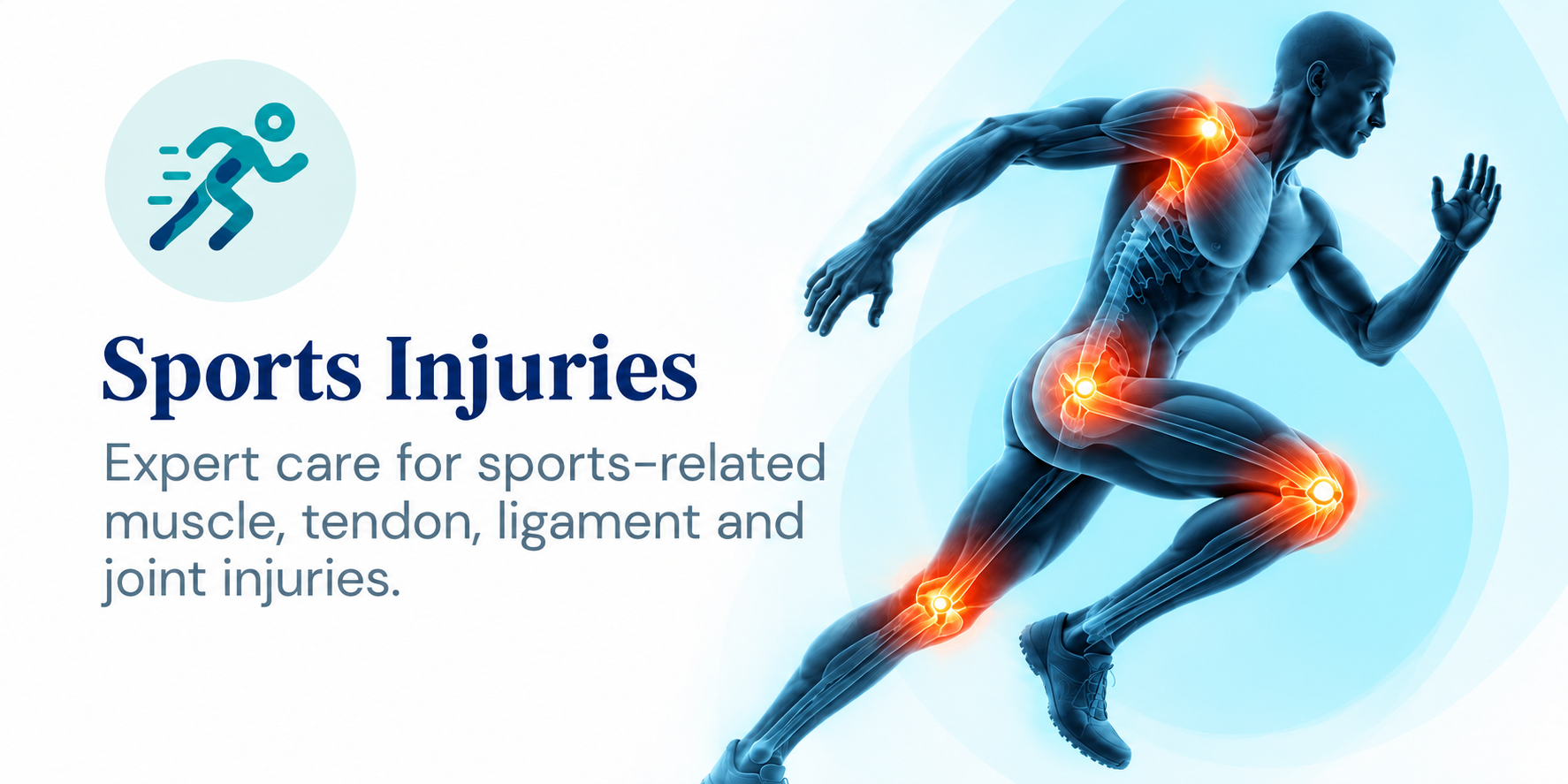
Knee twists, ankle rolls, muscle pulls and gym or running injuries are common. A proper assessment shows whether rest, rehabilitation or further treatment is needed, and when it is safe to return to activity.
Call for appointments and availability
WHAT WE ASSESS
Focused evaluation.
Personalised care.
Sports injuries: what patients usually notice
- A "pop" or tearing sensation in the knee during a twist, with swelling within hours
- A knee that gives way or feels unstable when turning or changing direction
- Knee twisted during football, cricket or basketball, followed by pain while walking
- An ankle that keeps turning over while walking or running
- A sudden sharp pain in the hamstring, calf or thigh while running or sprinting
- Pain after gym sessions, or after a sudden increase in training load
Medical terms you may hear
Ligament injuries are sprains of the ligaments that hold joints together, such as the anterior cruciate ligament (ACL), posterior cruciate ligament (PCL), medial collateral ligament (MCL) and lateral collateral ligament (LCL) of the knee. A meniscus tear is a tear of the knee cartilage. Muscle strains and tears affect the muscle belly, and tendinopathy is painful, overloaded tendon.
Common causes
- Twisting or pivoting, especially when changing direction quickly
- Landing badly from a jump
- Direct contact or a fall during play
- Overuse or a sudden increase in running, cycling or gym load
- Poor conditioning, muscle imbalance or a previous injury that has not been fully rehabilitated
What a consultation includes
- A detailed history of how the injury happened and what you felt at the time
- Examination of swelling, range of movement, strength and joint stability
- X-rays when a fracture needs to be ruled out
- MRI scans when they will help decide the treatment; where needed these may be done at another centre
- A rehabilitation plan with clear steps and a realistic timeline
Treatment options
In the first days, protection, relative rest, ice, compression and elevation can help control pain and swelling. A structured rehabilitation programme then restores movement, strength and control, and may include supports or bracing where suitable. Not every ligament or meniscus injury needs surgery. Surgery is considered when instability keeps affecting function, the joint locks, or when a tailored rehabilitation programme has not been enough. Return to sport is planned in stages and checked against strength, movement and sport-specific tests.
When to arrange an assessment
- A knee or ankle that gives way repeatedly
- Swelling that stays or returns after activity
- Locking, catching or a feeling that the joint is loose
- Pain or weakness that is slow to improve after the first week or two
- Before returning to sport after a significant injury
Warning signs that need urgent care
- You cannot put any weight on the leg after an injury
- The joint looks out of position or deformed
- Numbness, tingling or a cold, pale foot or hand
Go to the nearest emergency department or call 112 if you have severe pain with a deformed limb, numbness, a cold or pale limb, or heavy bleeding.
PATIENT CENTRED CARE
Accurate diagnosis. Appropriate treatment. Better movement.
The right treatment depends on the cause, severity, duration and functional impact of your symptoms. Consultation helps determine whether you need conservative care, further investigation, rehabilitation or referral for additional treatment.
Schedule a Consultation →This information is educational and does not replace an individual clinical assessment. Your symptoms and treatment are assessed at consultation. Call for appointments and availability: +91 92116 36116.