 Book Appointment →
ORTHO CARE CLINIC • SERVICES
Fracture and Orthopaedic Injury Consultation
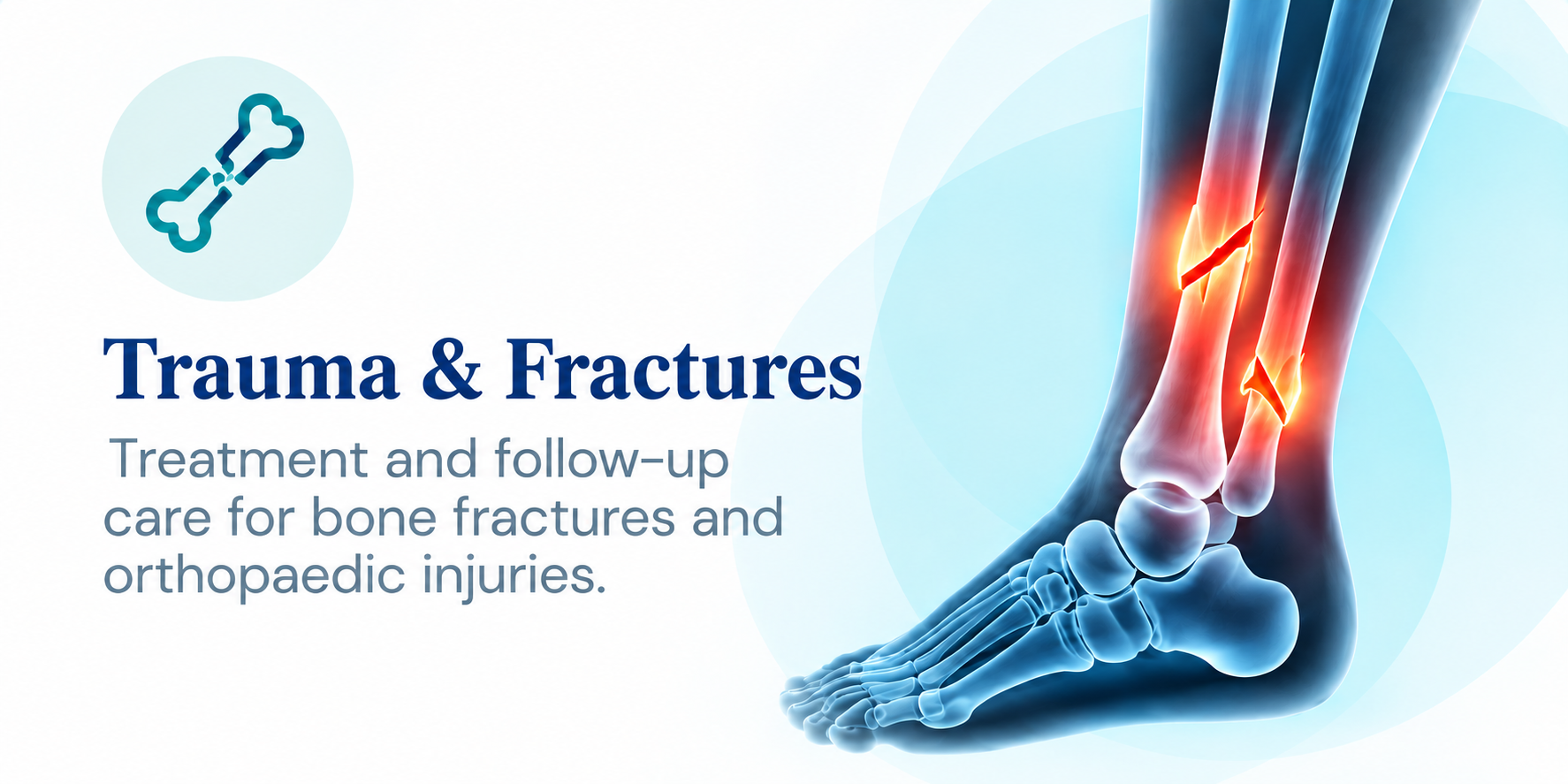
Falls, road accidents and sports injuries can cause fractures, dislocations and sprains. Ortho Care Clinic offers consultation and follow-up for many orthopaedic injuries. Serious injuries need emergency care at a hospital first.
Call for appointments and availability
WHAT WE ASSESS
Focused evaluation.
Personalised care.
Injuries that need emergency care first
- A bone that is visibly out of position, or a joint that looks dislocated
- Bone coming through the skin, or heavy bleeding
- A limb that is numb, cold, pale or blue
- Inability to walk or bear weight after a serious fall or accident
- Head injury, loss of consciousness or confusion after an injury
Go to the nearest emergency department or call 112 if you have severe pain with a deformed limb, numbness, a cold or pale limb, or heavy bleeding.
Broken bones and injuries: what patients usually notice
- A broken hand, broken wrist or fractured ankle after a fall
- Pain, swelling and bruising after an injury
- A bone that feels like it cracked, or pain on pressing a specific point on a bone
- Difficulty putting weight on a foot or leg
- Finger or wrist pain after a fall onto an outstretched hand
Medical terms you may hear
A fracture is a break in a bone. A stress fracture is a small crack caused by repeated loading, often in runners or people starting a new activity. A dislocation is when a joint is forced out of its normal position, and a sprain is a ligament injury. Delayed union or non-union describes a fracture that is slow or fails to heal.
Common causes
- Falls, especially in older adults, and falls on an outstretched hand
- Road traffic accidents
- Sports injuries and twisting injuries
- Repetitive loading that leads to stress fractures
- Weak bones (for example from osteoporosis), where a fall from standing height can cause a fracture
What a consultation includes
- A history of the injury and an examination of the area
- Review of X-rays and reports from the emergency department or other centres
- Advice on immobilisation (such as a splint, brace or cast) where it is needed
- A follow-up plan to check healing and the return of movement
- Referral for further care where a procedure is needed
Treatment options
The right treatment depends on the bone, the type of fracture and the person. Some fractures heal with immobilisation and careful follow-up. Others need surgical fixation, which is carried out at a hospital and planned with you. After healing, rehabilitation helps restore movement, strength and confidence. Children have growth plates, so some injuries in children need specific assessment.
When to arrange an assessment
- Pain or swelling after an injury that is not settling
- Pain after a fall, even if you think nothing is broken
- Follow-up after a fracture or a period of immobilisation
- Stiffness or weakness that lingers after an injury
- Slow healing or pain in the same area several weeks after a fracture
PATIENT CENTRED CARE
Accurate diagnosis. Appropriate treatment. Better movement.
The right treatment depends on the cause, severity, duration and functional impact of your symptoms. Consultation helps determine whether you need conservative care, further investigation, rehabilitation or referral for additional treatment.
Schedule a Consultation →This information is educational and does not replace an individual clinical assessment. Your symptoms and treatment are assessed at consultation. Call for appointments and availability: +91 92116 36116.