 Book Appointment →
ORTHO CARE CLINIC • SERVICES
Arthritis and Bone Health Consultation
Arthritis and weaker bones (osteoporosis) become more common with age. An early assessment can help control pain, protect movement and reduce the risk of fractures.
Call for appointments and availability
WHAT WE ASSESS
Focused evaluation.
Personalised care.
Arthritis and bone strength: what patients usually notice
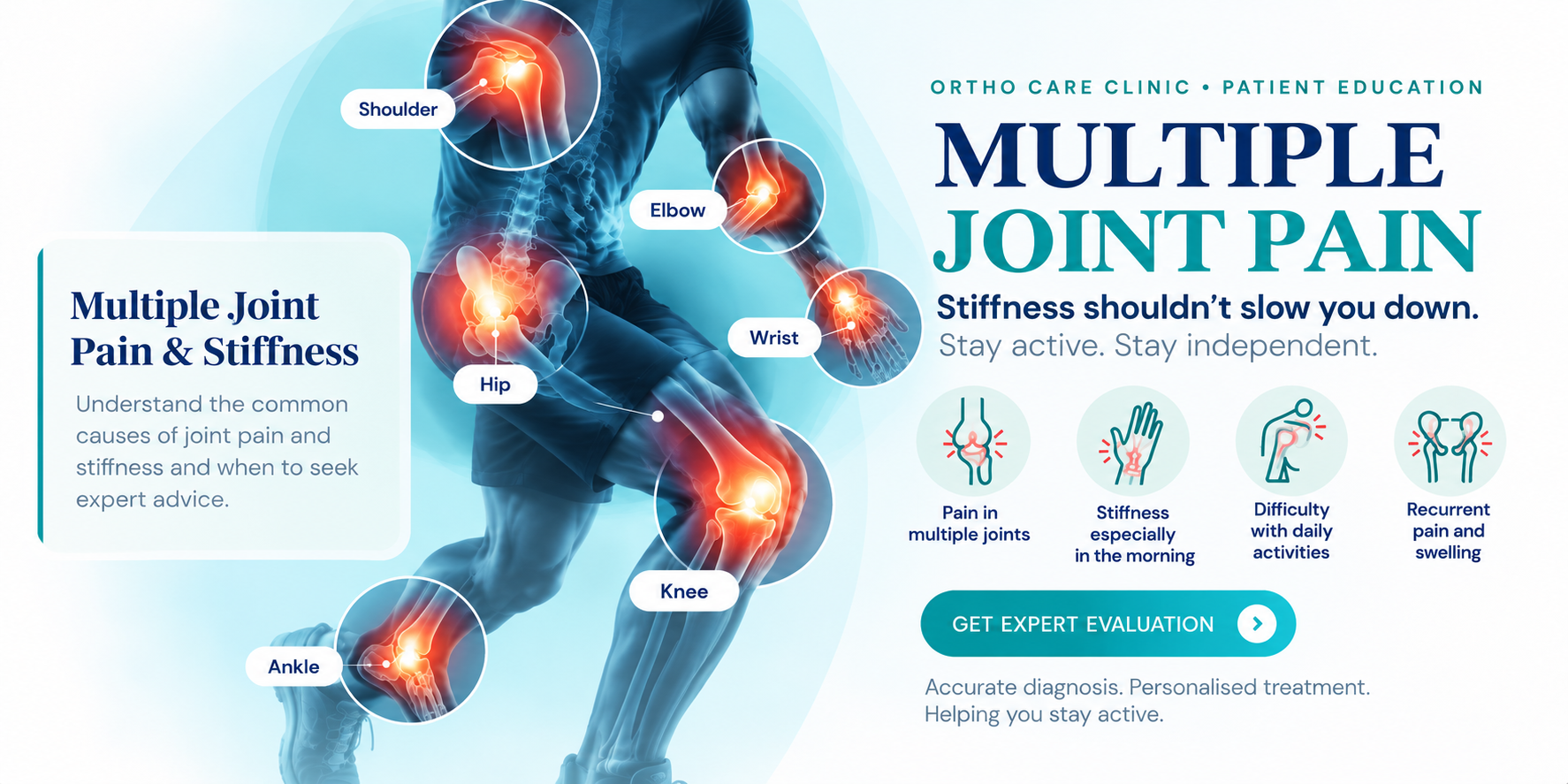
- Joint pain after walking or activity, and joints that feel worn out
- Stiffness after waking up that eases within a few minutes
- Joint swelling, or a joint that feels less stable than before
- Reduced ability to walk, climb stairs or get up from a chair
- A fracture after a minor fall, which may point to weak bones
- Back pain with loss of height, which can be a sign of a spinal fracture related to weak bones
Medical terms you may hear
Osteoarthritis is wear and tear of the joint cartilage, and it is the most common form of arthritis. Osteoporosis is reduced bone density, which makes bones more fragile. A fragility fracture is a fracture from a fall from standing height or less. Bone health assessment looks at fracture risk and the factors that affect bone strength.
Common causes
- Age-related wear of the joint cartilage
- Previous joint injuries
- Hormonal changes, including after the menopause
- Low levels of calcium or vitamin D, or low physical activity
- Smoking, heavy alcohol use or long-term steroid medicines
- A family history of arthritis or osteoporosis
What a consultation includes
- A history of your joint symptoms, previous fractures and medicines
- Examination of joints, movement, strength and walking
- X-rays for arthritis and, where needed, for bone strength
- Blood tests where indicated
- A bone density scan (DEXA) where it is advised, arranged at an appropriate centre
Treatment options
Arthritis is usually managed with exercise and muscle strengthening, weight management, activity changes, suitable supports, pain-relieving medicines as prescribed, and injections in selected cases. Joint replacement is discussed when symptoms seriously affect quality of life and non-operative care is no longer enough. For osteoporosis, the plan can include calcium and vitamin D intake, weight-bearing exercise, falls prevention and, where indicated, medicines to strengthen bone, based on your individual risk and other medicines you take.
When to arrange an assessment
- Joint pain or stiffness that is limiting walking or daily activities
- A fracture after a minor fall, or a fall with pain that does not settle
- Persistent joint pain after previous treatment
- Questions about bone health, falls risk or a previous bone density result
Warning signs that need urgent care
- A hot, very swollen joint with fever or feeling unwell
- A fall with severe hip pain and inability to walk
- Sudden severe back pain or new leg weakness
Go to the nearest emergency department or call 112 if you have severe pain with a deformed limb, numbness, a cold or pale limb, or heavy bleeding.
PATIENT CENTRED CARE
Accurate diagnosis. Appropriate treatment. Better movement.
The right treatment depends on the cause, severity, duration and functional impact of your symptoms. Consultation helps determine whether you need conservative care, further investigation, rehabilitation or referral for additional treatment.
Schedule a Consultation →This information is educational and does not replace an individual clinical assessment. Your symptoms and treatment are assessed at consultation. Call for appointments and availability: +91 92116 36116.