 Book Appointment →
ORTHO CARE CLINIC • SERVICES
Bone and Joint Pain Consultation
Persistent joint pain, stiffness, swelling or reduced movement in the knees, hips, shoulders or other joints can affect walking, sleep and daily tasks. We assess the cause of these symptoms and plan treatment, starting with the least invasive options that are likely to help.
Call for appointments and availability
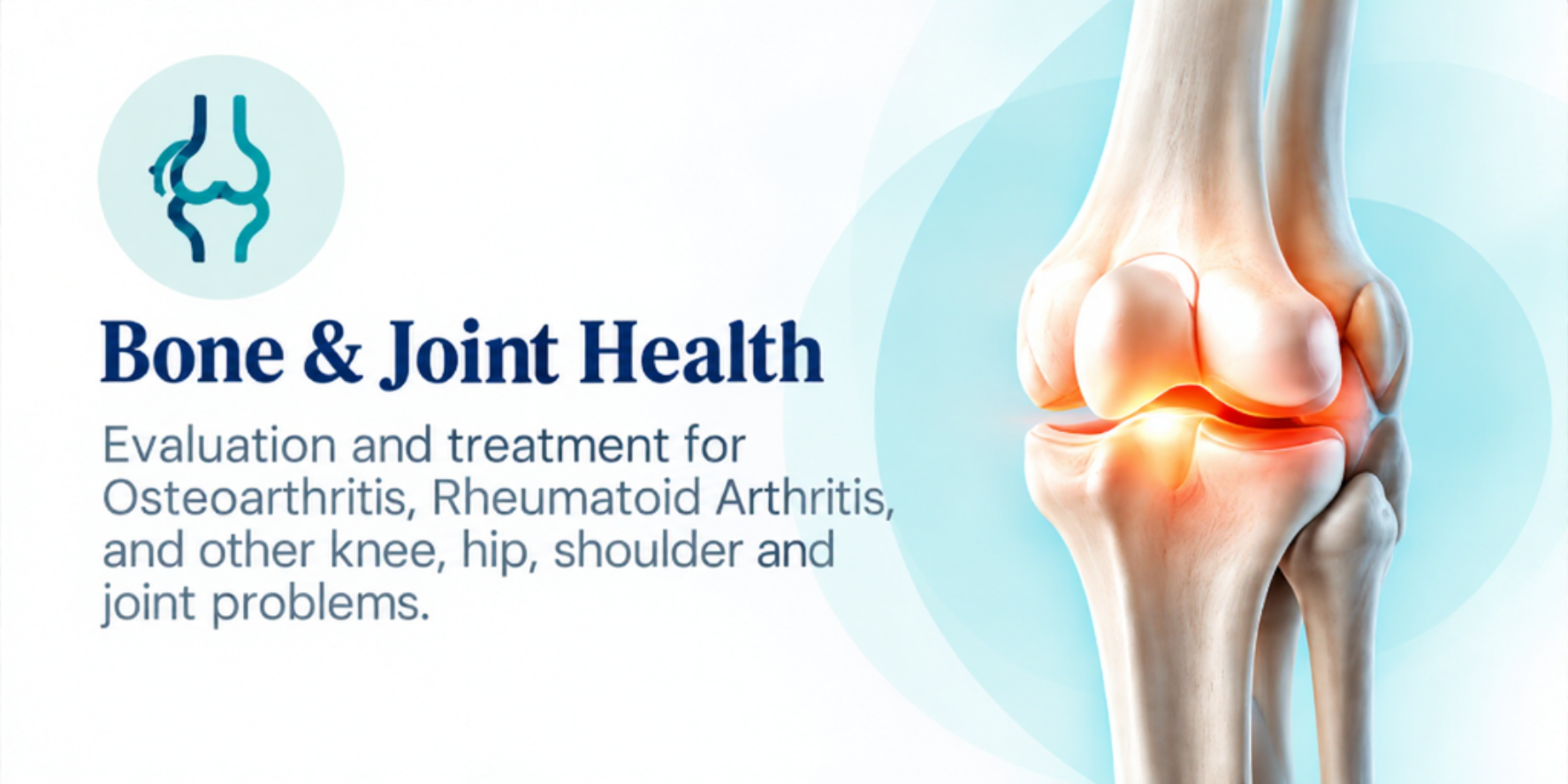
WHAT WE ASSESS
Focused evaluation.
Personalised care.
Joint pain and stiffness: what patients usually notice
- Joints that ache when walking, standing or climbing stairs
- Stiffness after resting or first thing in the morning that eases after moving around
- Swelling, warmth or redness around a joint
- Joints that crack, click or grind; these are often harmless, but worth assessing if they hurt or swell
- Difficulty getting up from a chair, squatting or getting out of a car
- Pain in several joints at the same time, or joint pain with reduced energy
Medical terms you may hear
Joint pain is called arthralgia. Stiffness and swelling can be caused by osteoarthritis (wear-and-tear arthritis), inflammatory arthritis such as rheumatoid arthritis, or other joint conditions. Where an inflammatory condition is suspected, we may arrange blood tests or refer you to a rheumatologist.
Common causes
- Gradual wear of joint cartilage with age (osteoarthritis)
- An earlier injury to a joint that has not fully settled
- Inflammatory joint conditions
- Overuse or repetitive strain, including heavy work or sudden increases in activity
- Extra body weight placing additional load on the knees and hips
- Muscle weakness and reduced activity
What a consultation includes
- A discussion of your symptoms: how long they have lasted, and what makes them better or worse
- Examination of the joint, including movement, strength and stability
- Review of any previous X-rays, scans, blood reports and prescriptions
- X-rays or blood tests only when they are likely to change the plan
- A clear explanation of the diagnosis and a treatment plan you can follow
Treatment options
Most joint problems are first managed without surgery. Options can include changes to activity, a supervised exercise programme (which may be guided by a physiotherapist), weight management, pain-relieving medicines as prescribed, supports where suitable, and injections in selected cases. Surgery is discussed only when non-operative care has not helped enough and when it is appropriate for you.
When to arrange an assessment
- Joint pain or stiffness lasting more than a few weeks
- Swelling that keeps returning or does not settle
- Pain that wakes you at night
- Joint problems that are affecting walking, work or sleep
- Joint pain after an injury that is not improving
Warning signs that need urgent care
- A hot, very swollen joint with fever or feeling generally unwell
- A sudden inability to bear weight on a leg or to move a joint
- A joint that looks deformed after an injury
Go to the nearest emergency department or call 112 if you have severe pain with a deformed limb, numbness, a cold or pale limb, or heavy bleeding.
PATIENT CENTRED CARE
Accurate diagnosis. Appropriate treatment. Better movement.
The right treatment depends on the cause, severity, duration and functional impact of your symptoms. Consultation helps determine whether you need conservative care, further investigation, rehabilitation or referral for additional treatment.
Schedule a Consultation →This information is educational and does not replace an individual clinical assessment. Your symptoms and treatment are assessed at consultation. Call for appointments and availability: +91 92116 36116.