 Book Appointment →
ORTHO CARE CLINIC • SERVICES
Paediatric Orthopaedic Consultation
Many children's bones and joints develop normally, and some variations are part of growing up. An orthopaedic assessment helps tell normal development apart from problems that need treatment, and gives parents clear, practical advice.
Call for appointments and availability
WHAT WE ASSESS
Focused evaluation.
Personalised care.
Common concerns parents describe
- Child walking with a limp, or favouring one leg
- Child walking on the toes
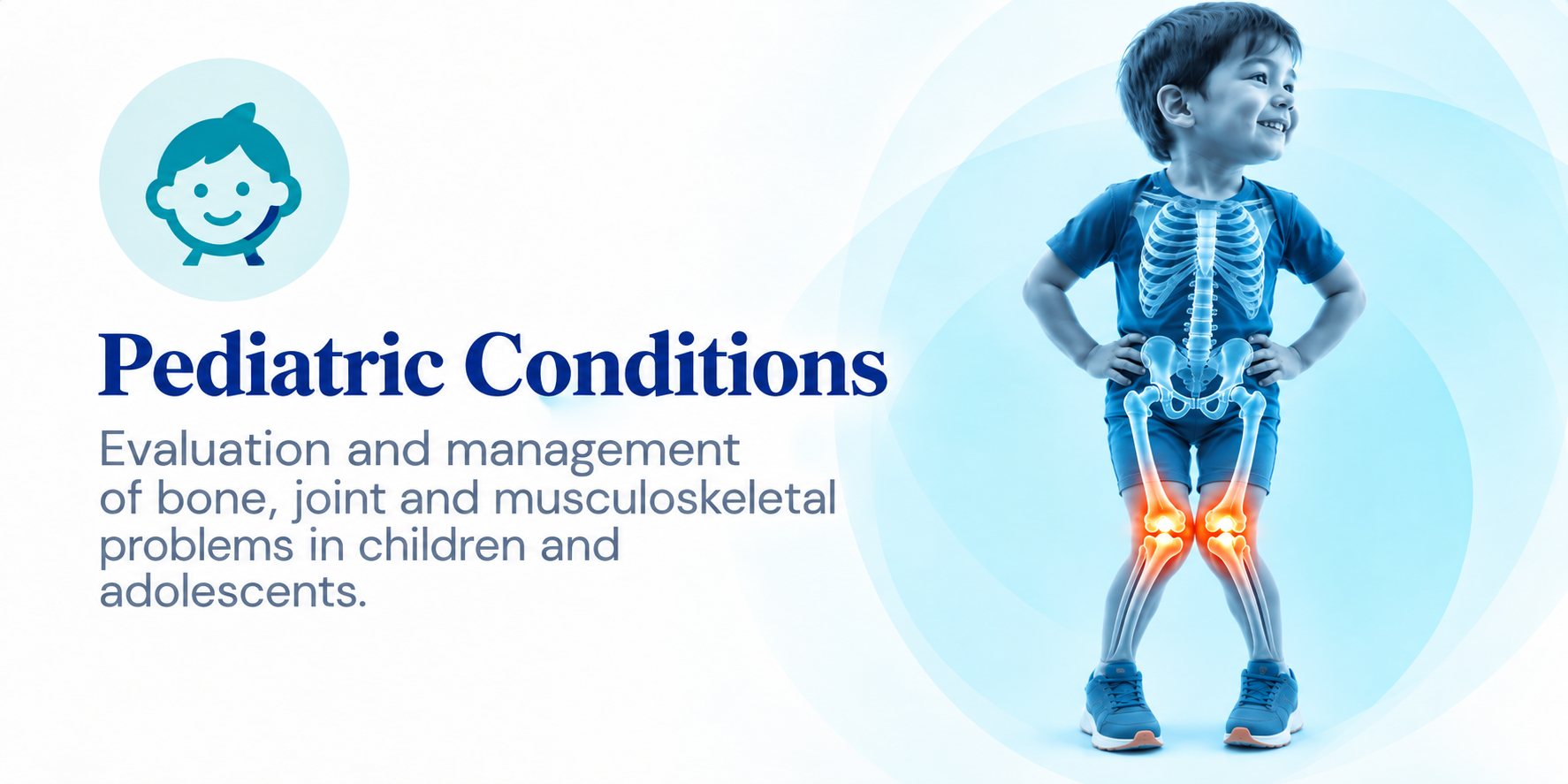
- Bow legs in a toddler, or knock knees in a child
- Feet turning inward (in-toeing) or outward when walking
- One leg looking shorter than the other
- Child complaining of leg pain after play, or delayed walking
- Child falling often or having difficulty with running and stairs
Medical terms you may hear
Bow legs are called genu varum and knock knees are genu valgum. In-toeing and out-toeing describe the direction the feet point when walking. A difference in leg length is called limb length discrepancy. Developmental hip problems in infants are checked during routine assessments, and a specialist review helps if there is concern.
Common causes
- Normal variation in growth; many bow legs and knock knees in young children settle as they grow
- Growth-related changes in alignment or leg length
- Injuries, including fractures and sprains
- Conditions present from birth or developing during childhood
- Less commonly, infection or inflammation, which needs prompt assessment
What a consultation includes
- A history of growth, development, activity and any injuries
- An examination of walking pattern, leg alignment, hips, knees and feet
- X-rays only when they are needed to answer a specific question
- Clear explanation of what is normal and what needs to be watched
- A plan for review if the situation needs to be followed over time
Treatment options
Many variations need observation rather than treatment. Depending on the problem, options may include exercise or footwear advice, supports or braces in selected cases, and treatment of any injury. Surgery is considered only for certain conditions and is discussed with parents in detail.
When to arrange an assessment
- A limp that lasts more than a few days
- Delayed walking compared with other children of a similar age
- Leg or hip pain that keeps returning, or limping after play
- A noticeable difference between the two legs
- Parents who are worried about the way their child walks, runs or stands
Warning signs that need urgent care
- A child who refuses to bear weight or cries when the leg is moved
- Limping or limb pain with fever or feeling unwell
- Swelling, redness or warmth around a joint
- A limb injury with deformity, numbness or a cold, pale foot
Go to the nearest emergency department or call 112 if you have severe pain with a deformed limb, numbness, a cold or pale limb, or heavy bleeding.
PATIENT CENTRED CARE
Accurate diagnosis. Appropriate treatment. Better movement.
The right treatment depends on the cause, severity, duration and functional impact of your symptoms. Consultation helps determine whether you need conservative care, further investigation, rehabilitation or referral for additional treatment.
Schedule a Consultation →This information is educational and does not replace an individual clinical assessment. Your symptoms and treatment are assessed at consultation. Call for appointments and availability: +91 92116 36116.